
Websites for Handyman Services
Handyman Website Design
Handyman customers have a list of small jobs and want one person they can trust to knock it out. Your site should say clearly what you do, what you don't, and how to send over a list.
What a handyman website needs
- A plain list of the jobs you take: repairs, mounting, assembly, patching, painting touch-ups
- A clear note on what you don't do because it needs a licensed contractor
- How you price: by the hour, by the job or by visit
- Your service area
- A request form where people can describe or upload their list
What customers check before they call
- Whether you'll take a small job. A homeowner with one loose cabinet door wonders if it's even worth your trip. Say up front that small jobs are welcome, if they are.
- Whether you can do the whole list. Someone with a sticky door, a TV to mount and a leaky caulk line wants one visit. Show the range of tasks you handle in one trip.
- What you can legally take on. Customers don't always know where handyman work stops and a licensed trade begins. A clear note on what you refer out shows you play it straight.
- How you charge. An hourly rate, a minimum visit or a flat price per task are all fine. People just want to know which one before you show up.
- That you will clean up after yourself. Drywall dust and paint drips are what people picture. Mention that you protect floors and haul away the mess.
Pages and features to include
- Repairs and fixes. Doors, drawers, drywall patches, loose railings, caulking and weatherstripping. Use the words a homeowner would type into a search.
- Mounting and assembly. TVs, shelves, curtain rods, mirrors and flat-pack furniture each deserve a line so people can find the exact job.
- Painting and touch-ups. Accent walls, trim, scuffed hallways and touch-ups before a sale or move-out.
- What I don't do. A short, friendly list of work you send to licensed electricians, plumbers or contractors. It builds trust instead of losing jobs.
- Honey-do list form. Let people type out their list or attach photos of each item. You get it by email and can quote the whole visit.
- About the owner. Your name, your background and why you started. Handyman customers are letting one person into their home, so a face helps.
Photos and credentials to gather
- A clear headshot of you. When the owner is the business, a friendly face does more than a stock photo of tools.
- Before-and-after drywall patches. A hole in the wall made invisible is easy proof of careful work.
- Mounted TVs and shelves. Level, clean installs with hidden cords show the neat finish people hope for.
- Your work van or truck. A marked vehicle in a driveway tells neighbors you are a real local business.
- Tools and drop cloths in use. Shots of floor protection and a tidy work area speak to the worry about mess.
- Insurance certificate. List the liability coverage you carry so cautious homeowners and landlords can see it.
A sample handyman homepage, top to bottom
- Hero: your name, the towns you serve and a tap-to-call button
- Small jobs welcome, with a quick list of common fixes
- Service sections for repairs, mounting, assembly and painting
- What you refer to licensed trades, stated plainly
- How you charge for a visit or a full list
- Before-and-after photos and a link to your Google reviews
- Honey-do list form with photo upload and your service area
Which design fits your handyman business
Local Family Business is the best fit for a one-person or husband-and-wife handyman shop, since it puts the owner's name and face at the center. Trust & Reviews works for handymen who want to lead with insurance, the line on what they won't do and their Google reviews, which reassures first-time customers. Premium Home Service suits a larger handyman company with several techs and a long service menu, because its tabbed sections keep many small job types organized.
Example design styles
We design your site for you. These samples use fictional businesses and show a few of the styles we build; tell us what you like when we talk. For real client work, see sites we’ve built.
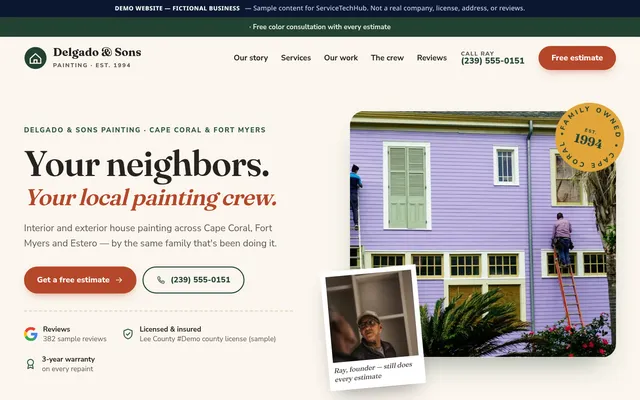 Local Family BusinessWarm and personal, for owner-run businesses where the name is the brand.
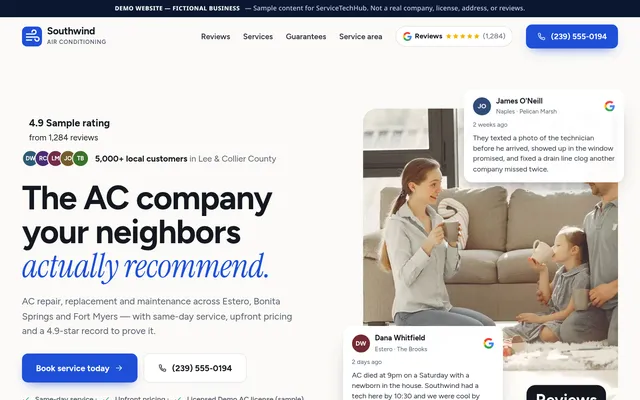 Trust & ReviewsPuts proof first: licenses, real reviews and service areas.
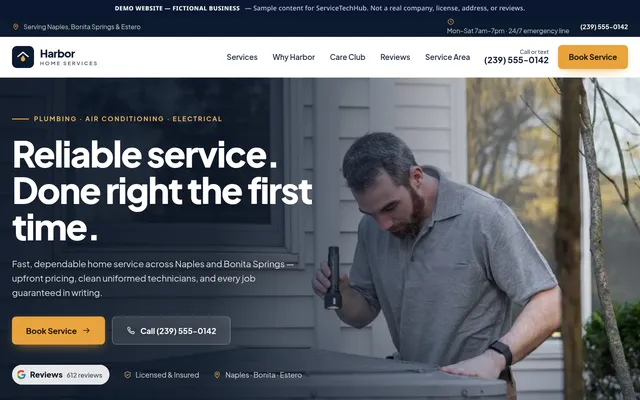 Premium Home ServicePolished service tabs and a simple booking section.
Design previews use fictional businesses. Your site uses your own name, photos and details.
Already have a handyman website?
Move it instead of starting over: keep your domain, we design and rebuild it for you from your existing content, and hosting and technical upkeep are included in the monthly price. How switching works
In Florida
Florida has a narrow exemption for minor work: casual, minor or inconsequential jobs under $2,500 total that aren't part of a larger project. Electrical, plumbing, HVAC, roofing and structural work still need a licensed contractor, so be careful how you describe your services.
Florida Statutes 489.103 (exemptions, including minor work under $2,500)
Common questions
Can I say I do small electrical or plumbing jobs?
Only if you hold the right license. We'll help you word your services so they match what you're allowed to do.
Should I list hourly rates?
Optional. Many handymen show a minimum visit charge and quote larger lists.
Can customers send me their whole to-do list through the site?
Yes. The request form has room for a long list and can take photos of each item. It all arrives in one email.
Can I have a page for each service I offer?
Starter gives you one page with every service as a section. Business and Pro let you split popular jobs like TV mounting or drywall repair onto their own pages.
Can people book a time slot online?
Online scheduling is not included in the standard plans and would be quoted separately. Most handymen take the request, then call back to set a time.
Can my site show my minimum visit charge?
Yes, if you want it shown. Some handymen list it to filter out jobs that don't fit, and others prefer to explain it on the phone.
Where we build handyman websites
Handyman websites in Georgia and South Carolina
Georgia
South Carolina
Call to get started, or check out online
Call (239) 210-5299 to get started, or check out online and we’ll contact you to collect your business info. Questions? Email hello@servicetechhub.com.